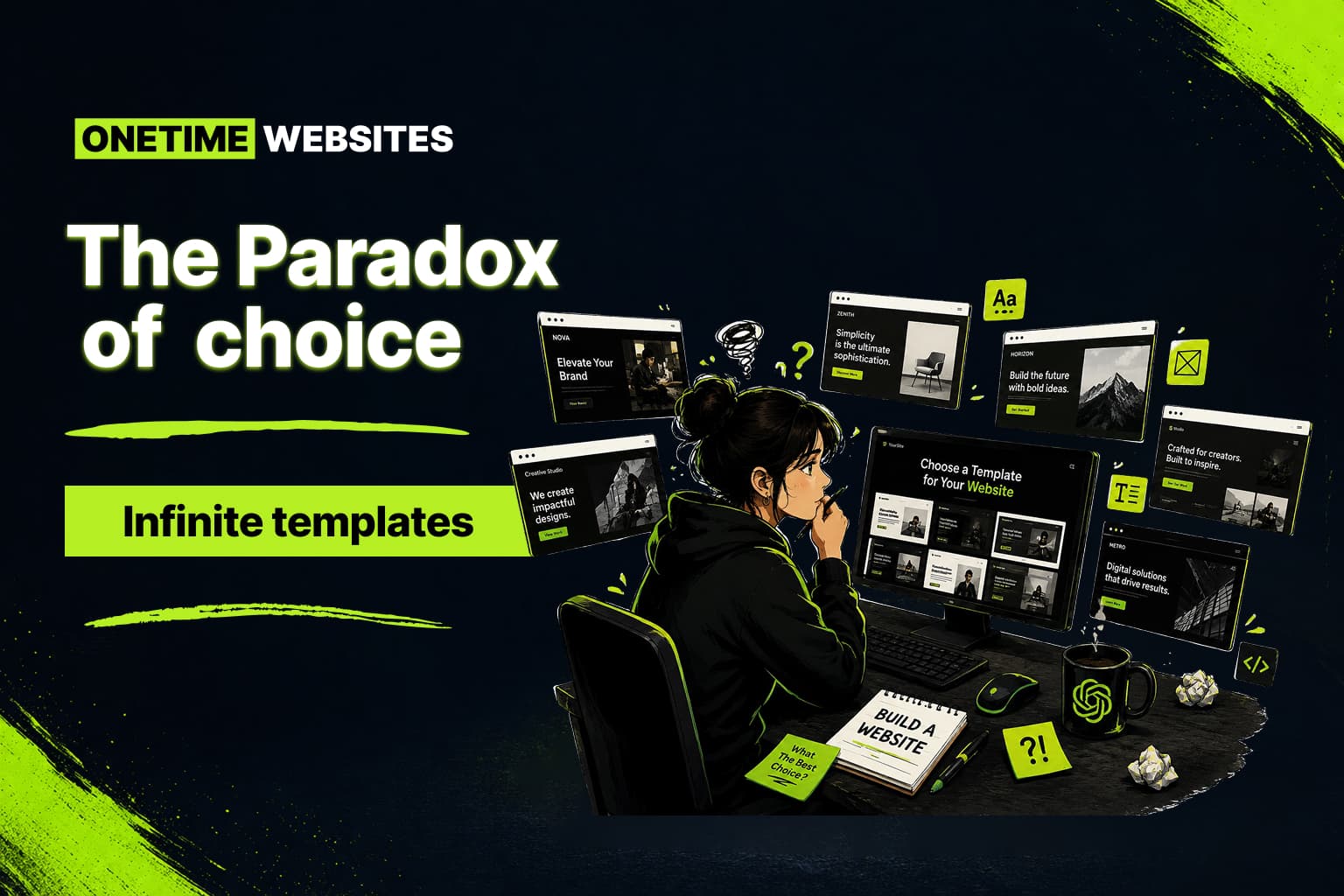
What is the Paradox of choice?
The paradox of choice is a concept introduced by the psychologist Barry Schwartz which suggests that the more options we have, the less satisfied we feel with our decision. This Phenomenon occurs because having too many choices requires more cognitive effort, leading to a decision fatigue and increased regret over our choices.
Learning to choose is hard. Learning to choose well is harder. And learning to choose well in a world of unlimited possibilities is harder still, perhaps too hard.
– Barry Schwartz in his book The Paradox of Choice.
Let's put it like this: Imagine walking into a grocery shop just to buy a bottle of ketchup. Instead of two or three familiar brands, the shelves hold 500 different types of ketchup. Spicy, organic, imported, artisanal, sugar-free, all staring at you.
What happens? Without noticing you spend 10 minutes reading labels. Your brain gets tired, You get frustrated, grab a random bottle you didn't really want, and walk out forgetting why you even entered the shop in the first place.
This is what psychologist Barry Schwartz calls The Paradox of Choice.
In the website world, major software builders brag about having "thousands of templates." But having infinite options isn't a feature—it’s a trap. Here is why too many choices are killing your website before it even launches, and why a UX/UI expert is your secret weapon.
Which Phase Are You In?
Before reading further, match yourself to one of these phases:
• Phase A: "I’ve spent three weeks switching between 12 different templates and still haven't launched."
• Phase B: "I picked a template, but it looks like a generic corporate clone and doesn't fit my brand."
• Phase C: "My site is live, but visitors are leaving because the template layout confuses them."
(If you are in Phase A or B, choice overload has officially trapped you!)
What is the Big Problem With "Infinite" Templates?
Popular website builders like Wix, Squarespace, WordPress (via Elementor/Divi), Webflow, Shopify, and Framer offer incredible tools. They aren't bad platforms. In fact, they are highly capable. The issue isn't the software; it's the illusion of design freedom.
When you are forced to choose from massive template libraries, two specific problems happen:
1. You Get the Wrong Design for Your Audience
Templates are built to look good with fake data and perfect placeholder photos. They are not built for your specific customer. You might pick a dark, moody, artistic template because you think it looks cool, completely forgetting that your target audience is older homeowners looking for a fast plumbing repair. The design fails because it serves your personal taste, not user utility.
2. The "Copy-Paste" Brand Identity
If a platform has 5 million users and 500 templates, math dictates that thousands of other businesses are using the exact same layout as you. If your website looks identical to three other competitors in your local area, you lose all perceived authority and brand uniqueness.
Let’s say you are launching a boutique fashion design label. You log onto a popular builder like Wix to pick a sleek portfolio theme. It feels fast and easy, However, consider the math behind the platform: As of 2026, Wix has over 8.5 million live websites running globally. Across the web ecosystem, competing builders like Squarespace host over 8.3 million live websites.
When millions of businesses pull from a limited pool of a few hundred stylised "Creative Design" templates, the probability of your fashion site looking exactly like 20, 50, or even 100 other brands in your industry is exceptionally high.
For a creative industry like fashion, where your entire value proposition is original style cloning a layout destroys your brand authority. If your digital storefront looks identical to a generic template, consumers sub-consciously assume your products are generic, too.
The Trade Reality: It’s Even Worse for Local Services
If clone templates destroy a boutique fashion label through a loss of original style, they destroy local services like: carpentry, building, and plumbing, through a complete loss of trust.
Consider a local carpenter, They do not need a website with neon gradients, abstract tech vectors, or smooth animations. They need a site that showcases heavy timber, sawdust, craftsmanship, and local reliability.
While trapped by choice overload, many pick a trendy template that looks sleek but completely disconnects from their audience. Worse, because popular builders host millions of sites globally, that carpenter’s layout will look identical to five other competitors in their local area.
(sample pictures)
When a website looks generic, the consumer’s brain subconsciously makes a dangerous assumption: If the website is lazy and copy-pasted, the craftsmanship might be too.
Even worse, the internet is flooded with fake lead-generation scam sites that capture user data to sell to subcontractors. These scams almost always use cheap, unmodified templates. If a legitimate local builder uses that same unedited style, consumers will instantly flag them as a scam or a corporate broker, rather than a trusted local business.
In addition, generic templates will absolutely crush local search engine optimisation (SEO) through indirect performance issues:
- The Duplicate Content Trap: If you use the standard boilerplate text and headings that came with the theme, Google may filter your content out of search results in favour of other sites using the exact same text, keeping you off the first page.
- The Quick Exit Signal: Google ranks sites based on user behaviour. If a local homeowner clicks your site, sees a generic, confusing template, and leaves within 3 seconds, they head straight back to the search results. This sends a negative signal that your site did not solve their problem, and your visibility will drop.
This is exactly why top-tier software designers, the engineers and UX architects who build modern digital platforms, are pivoting away from "infinite freedom" and toward data-driven filtering.
Software designers solve the paradox of choice by protecting small businesses from their own worst design instincts. Instead of dropping a carpenter into a library of 500 blank templates, expertly designed software now uses strict user research to build guardrails:
- Guided Onboarding: The software asks three simple questions: What is your industry? What is your primary goal? Who is your customer? It then dynamically filters the 500 options down to three hyper-relevant layouts engineered specifically for that trade.
- Opinionated Design Systems: Software designers intentionally restrict what you can change. They lock font pairings and colour palettes into proven, high-contrast, accessible combinations. They use strict layout containers so a non-designer cannot accidentally break the website's mobile responsiveness.
- Built-In Utility: Through extensive user research, software designers know exactly where local customers click. They don't make a carpenter invent a website from scratch. Instead, they surface pre-built, optimised blocks: a before/after image slider, a local service area map, and a simple quote calculator.
By removing the cognitive load of designing from scratch, software designers shift the paradigm from aesthetic creation to business strategy. They allow the small business owner to stop playing designer and start focusing on what actually makes money: their copy, their offers, and their customers.
Using AI or Website templates
With the rise of automated design, more than 50% of new website users now deploy AI site generators. While AI is an incredible tool for efficiency, it lacks a critical component of successful business: human connection.
According to foundational Harvard neuromarketing research, 95% of purchasing decisions are driven by the subconscious mind. Humans do not buy from a website simply because an algorithm placed a block of text correctly. They buy because of an emotional trigger—trust, excitement, security, or aspiration.
Platform / Designer | What It Solves For |
|---|---|
AI / Off-the-Shelf Template | Layout logic and clean code. |
Human UX/UI Designer | Emotional connection with the customers and target conversion. |
When a customer visits your website, they do not care about your technical layout. They are driven entirely by an immediate feeling or problem:
- The Homeowner has a burst pipe and feels panicked and stressed.
- The Fashion Buyer wants a unique outfit and feels a desire for status and identity.
In fact, an algorithm optimises for code, but a website must connect with a customer. Code doesn't buy your services, people do. If your design lacks human empathy, it fails at conversion.
Why a UX/UI Designer Trumps Any Drag-and-Drop Template
A website builder gives you a canvas, but it doesn't give you human empathy. That is where a UX/UI (User Experience / User Interface) designer comes in by applying a Human-Centered Design Framework. An expert designer protects your business from the template trap by focusing on three key human factors:
- Deep Audience Research: A designer uncovers exactly who your audience is. An older homeowner looking for emergency plumbing needs an entirely different interface than a Gen Z consumer looking for high-end streetwear.
- Neuromarketing Principles: Designers understand visual behaviour patterns, such as the "F-Pattern" or "Z-Pattern," placing your key messaging and calls-to-action exactly where human eyes naturally scan first.
- Evoking the Right Emotion: Through deliberate typography, custom spacing, and strategic colour psychology, a designer intentionally creates the exact subconscious mood required to turn a casual scroller into a paying customer.
The Verdict
Don't let the paradox of choice stall your business launch, and don't let a generic template dilute your brand value. Website software is an excellent hosting utility, but relying on a cookie-cutter template to convey your unique life's work is an expensive mistake.
If you want a website that actually resonates with human beings and drives commercial growth, step away from the copy-paste template library and invest in a strategic partner who designs for human behaviour.