Google finished its November core update on 24 November. About an hour later it posted something new on its Search Status Dashboard: another core update, due in December. It hasn't started yet, and there's no date, but for once Google has told us it's coming and roughly what it's about.
That gives small businesses a few days' notice, which almost never happens. This post covers what Google said, what "longer and more complex questions" and "personalised results" mean for a local business website, and what I'd do before it lands.
What Google actually said
The whole announcement is one short paragraph. Here's the part that matters:
"Preannounced the December 2026 core update, which focuses on multiple improvements to how our systems understand and rank relevant content (including for longer and more complex questions), as well as improving personalized results for people who have personalization turned on."
It also says the update applies in every country and language, that Google's usual core update guidance applies, and that it's "scheduled to be released in December 2026". That's all we get. There's no start date and no idea how long it will take.
Why the early warning is unusual
Normally you find out about a core update when it has already started. Google posts "Released the ... core update" on the dashboard, rankings start moving, and everyone works backwards from there. It has given a heads-up once before, in June 2019, but only the day before. This time we've had at least a week.
The other new thing is that Google has said what the update is for. None of this year's earlier core updates came with that.
| Update | Started | How long it took | Did Google say what it was for? |
|---|---|---|---|
| December 2025 core update | 11 Dec 2025 | 18 days | No |
| March 2026 core update | 27 Mar 2026 | 12 days | No |
| May 2026 core update | 21 May 2026 | 12 days | No |
| November 2026 core update | 10 Nov 2026 | 14 days | No |
| December 2026 core update | Not started yet | Not known | Yes: longer questions and personalised results |
Dates and durations from Google's Search Status Dashboard, checked on 27 November 2026.
If last December is anything to go by, the rollout could run up to Christmas or even past it. That's worth knowing if December and January are busy months for you.
What "longer and more complex questions" means for you
People don't just type "plumber Leicester" any more. With AI Mode and AI Overviews, a lot of searches now read like the question you'd ask a friend: who can fix a leaking combi boiler in Oadby this weekend, and roughly what will it cost?
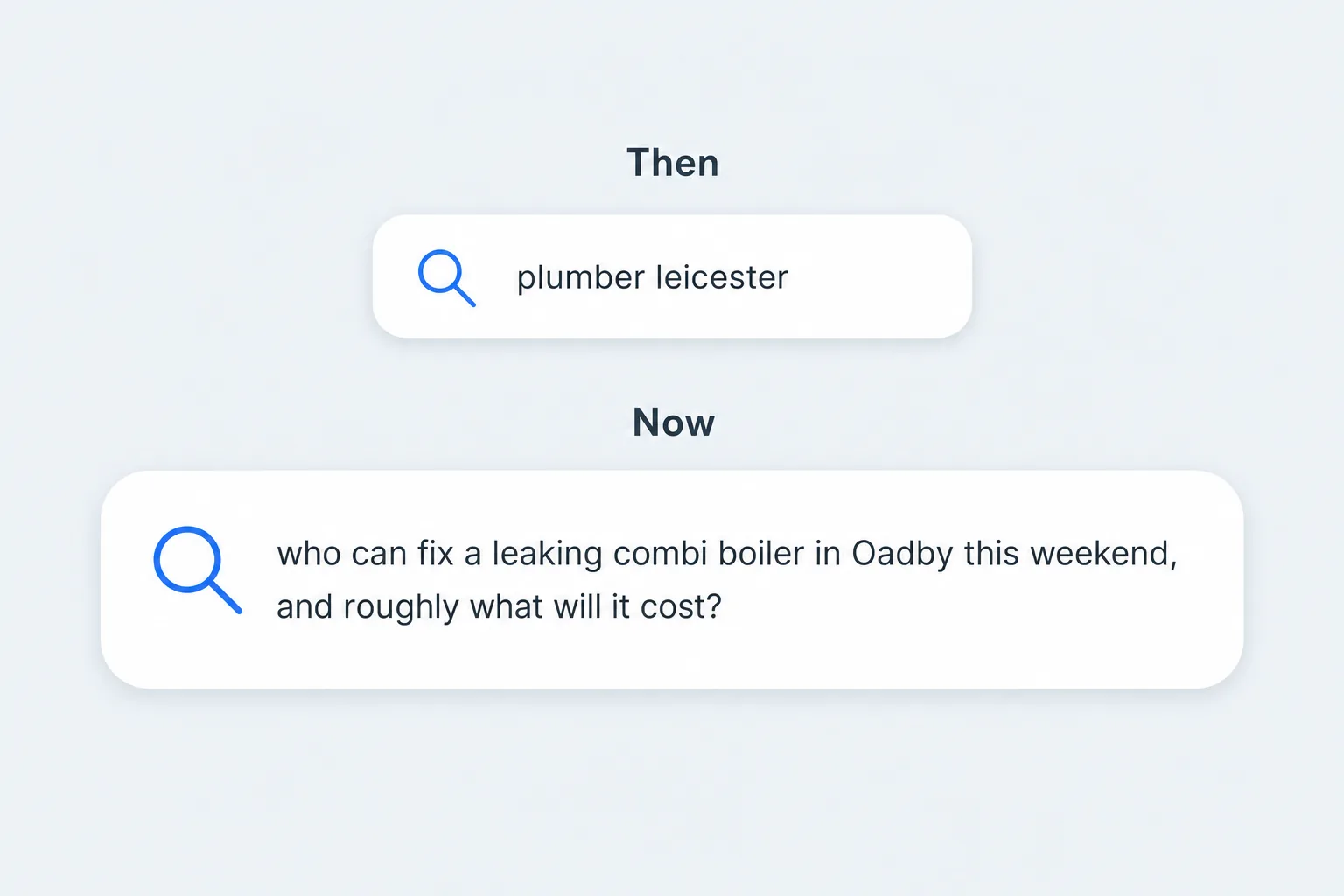
Google says this update improves how it understands and ranks pages for searches like that. It doesn't say how. My reading is that pages which answer a specific question clearly stand a better chance than pages that just repeat a keyword and a town name.
For most small business websites that means making sure each service has its own page, and that the page answers the things customers actually ask you on the phone: what's included, how long it takes, which areas you cover, roughly what it costs, and what happens next. If you keep getting the same question by email, it probably belongs on your website.
That's not a quick fix for this update. It's what Google has been asking for all along, and it's also what the AI tools read when they decide which businesses to mention. I wrote more about that in SEO and AEO explained.
The personalisation part
This bit is easy to skip, but it changes how you should check your own rankings.
When someone is signed in to a Google account with personalisation turned on, Google can use things like their search history to change what they see. According to Google's help pages, it doesn't change every result. It's more likely to change the order, or which kinds of results come first. Someone who usually watches videos, for example, might see videos above web pages.
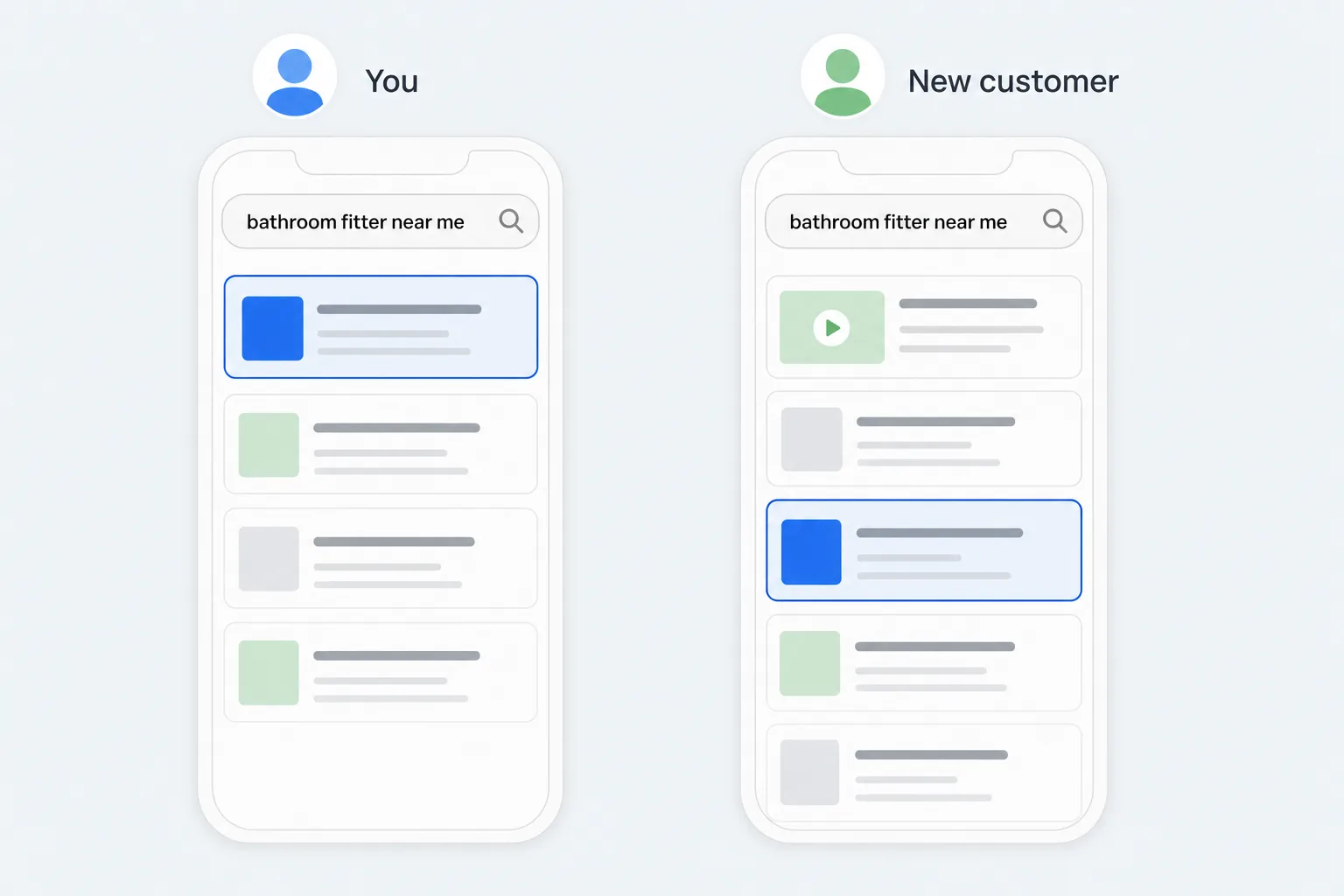
So if you search for your own business on your own phone, you're probably seeing a more flattering version than a new customer would. You've visited your site hundreds of times. They haven't.
Google puts a "Try without personalization" link at the bottom of some results pages, and you can also search in a private browser window. Neither is perfect, because Google still uses your location and device, but it's closer to what a stranger sees. Google Search Console is better still, because it shows the average across everyone who searched.
The timing is awkward
Google's own advice after a core update is to wait a full week after it finishes, then compare that week with the week before it started. For the November update, that week runs from 25 November to 1 December. That's Black Friday and Cyber Monday, which already makes the numbers odd for a lot of businesses, and the December update could start on 1 December.
In other words, there may not be a clean week to look at. If your traffic moves in December, it could be November's update, December's, the Christmas slowdown, or all three.
What I'd do this week
Not much, and that's on purpose. But a few small things will save you guessing later:
- Write down where you rank now for the three or four searches that bring you work. Do it in a private window, or better, take the numbers from Search Console.
- In Search Console, add an annotation on 24 November (the day the November update finished), and another one when the December update starts. Then you'll know which dates to compare.
- Pick your most important service page and read it as a customer. If it doesn't answer the questions people ring you about, add those answers. It's useful whether this update helps you or not.
- Don't make big changes to your site while the update is rolling out. If you change half your pages mid-update, you won't know what caused what.
If you missed what happened in November, I covered it in Google is changing search this November.
Frequently asked questions
When does the Google December 2026 core update start?
Google hasn't given a date. It announced the update on 24 November 2026 and said it is scheduled for release in December 2026. The Search Status Dashboard will show when it starts.
What is the December 2026 core update about?
Google says it focuses on how its systems understand and rank relevant content, including for longer and more complex questions, and on improving personalised results for people who have personalisation turned on.
Is it the same as the November 2026 core update?
No. The November core update ran from 10 to 24 November 2026. The December one is a separate update that hasn't started yet. If your rankings changed in November, that was the November update.
Why does my business rank higher on my phone than on my customer's?
Probably personalisation. Google can change the order of results based on a signed-in user's history, and you've likely visited your own website far more than anyone else. Search Console gives you a fairer picture.
Should I change my website before the update?
Only if the change would help your customers anyway, such as answering common questions on your service pages. Don't make big changes just because an update is coming, and avoid changing lots of pages once it has started.
Want a hand with it?
We're a web design and SEO business based in Leicester. If you'd like someone to look at your service pages before the update lands, or to make sense of your Search Console numbers afterwards, get in touch. You can also read about our local SEO work or how we help businesses around Leicester.