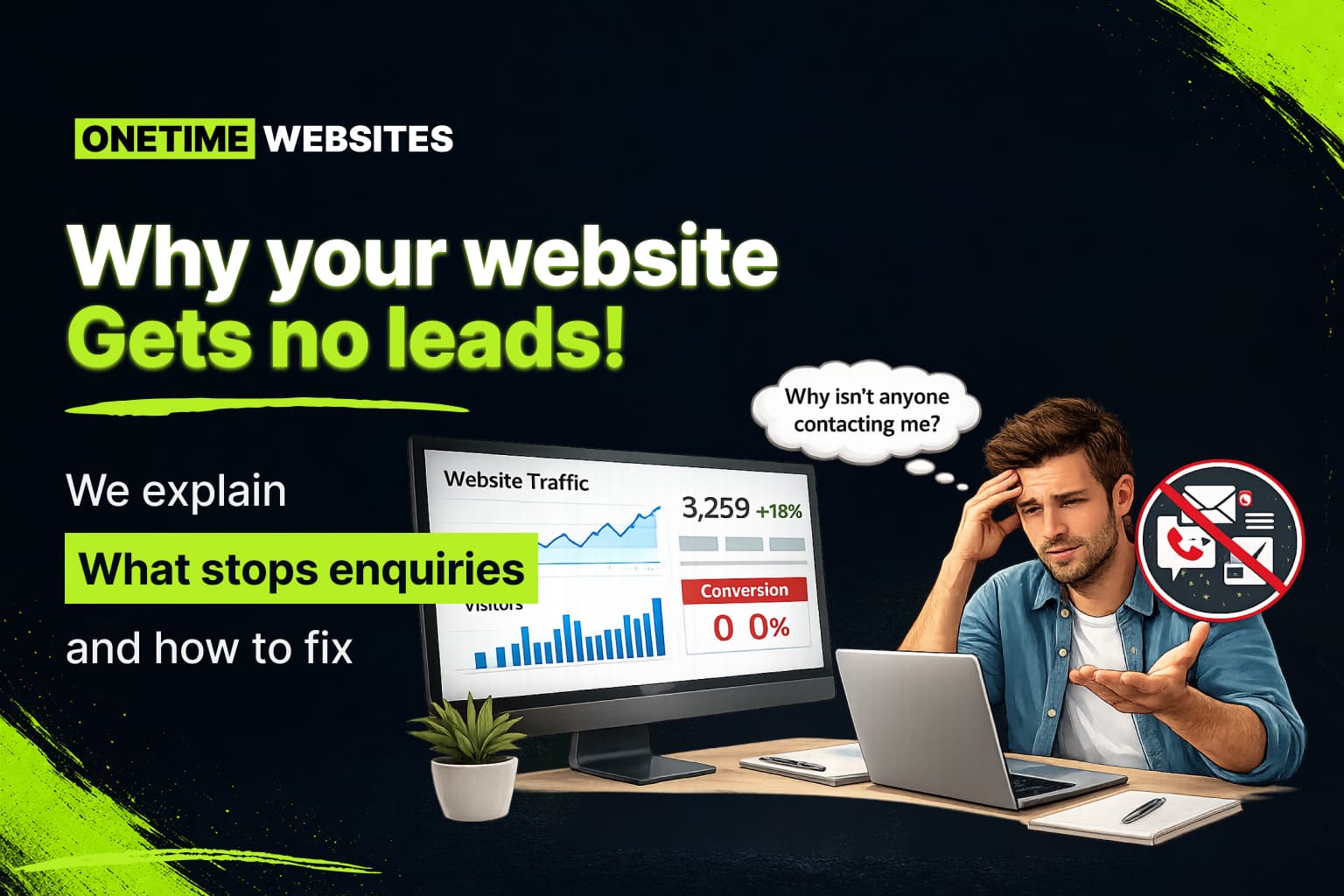
Most business owners think their website has a traffic problem.
But a lot of the time, it does not.
The real problem is that the website is not turning visitors into enquiries. People land on it, have a quick look, and leave. No message. No call. No form filled in. No work.
The real issue
A lot of websites fail for a simple reason.
They do not give people enough confidence to take the next step.
That usually comes down to a few things. The message is not clear enough. The website does not build trust quickly enough. The structure is poor. Or there is no real push towards action.
So even if people are visiting your site, they are not converting.
And in 2026, that matters more than ever. People are making faster decisions online. They are comparing businesses quicker. They are searching in more direct ways. Google says its newer AI-driven search experiences are leading users to ask longer, more specific questions, which means websites need to be clearer and more useful than ever.
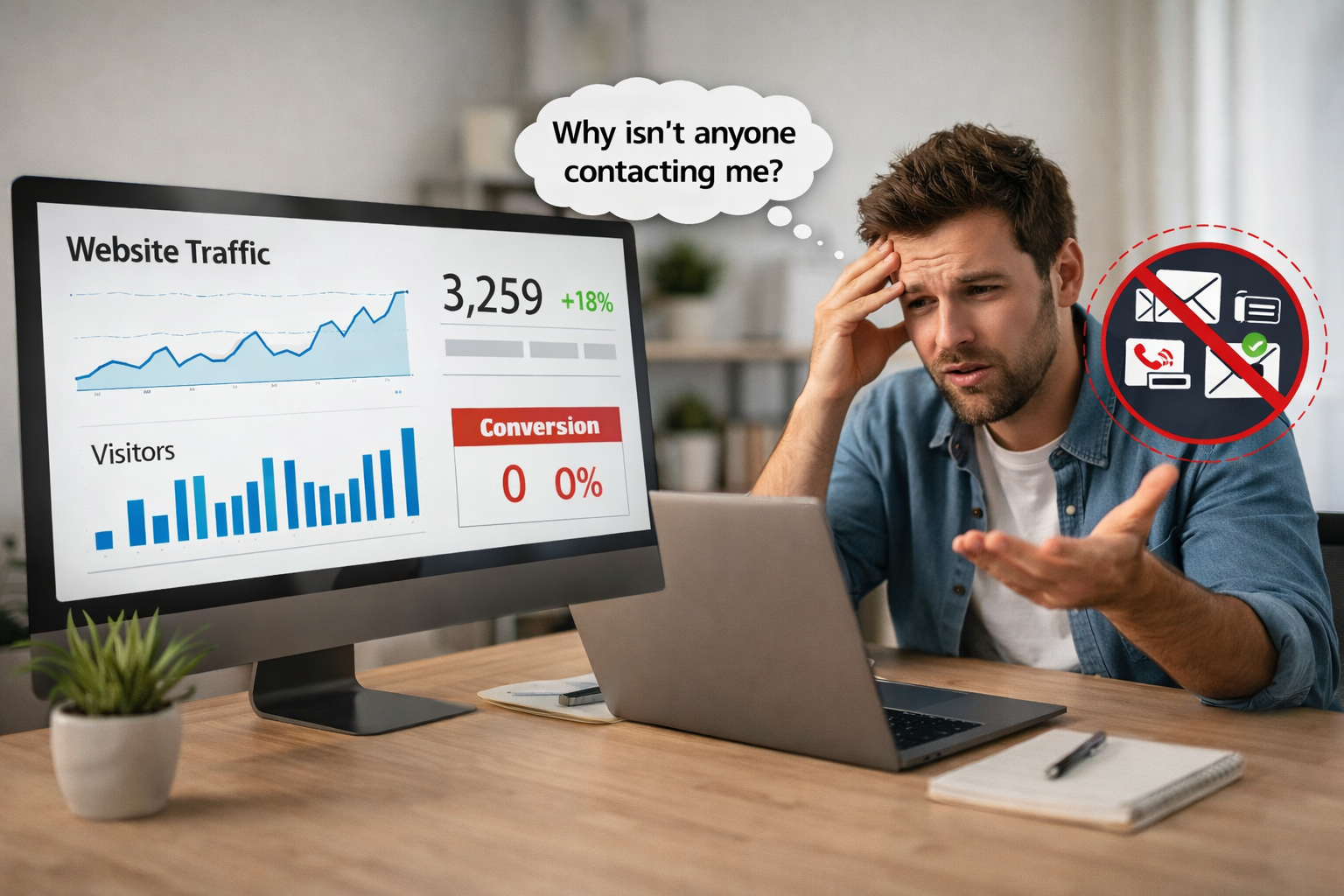
Why most websites do not generate leads
First of all what is a Lead ?
In business, a lead refers to a person or entity that has shown interest in a product or service, often representing potential future sales
From wikipedia,
1. The message is too vague
A lot of websites say plenty, but explain very little.
They use generic lines, vague promises, and filler wording that sounds nice but does not really tell the visitor what the business does, who it helps, or why they should choose it.
If someone lands on your website and cannot quickly understand what you offer, they will usually leave.
2. There is not enough trust
Even if people understand what you do, they still need to trust you.
If there are no reviews, no proof of work, no real explanation of who you are, and no clear signs that your business is legitimate, then people hesitate. And hesitation kills enquiries.
Research around web credibility has shown for years that people form impressions quickly, and trust signals still play a huge part in whether they are willing to take action.
3. The structure is weak
A lot of websites are built with no real direction.
Everything gets dumped onto one page. Services are not separated properly. Contact options are buried. The visitor ends up doing too much work just to understand what is going on.
A good website should guide people, not confuse them.
4. There is no clear next step
This gets missed all the time.
Some websites never actually ask the visitor to do anything. Or if they do, it is weak, hidden, or too generic.
If someone is ready to enquire, your site should make that feel easy.
Quick comparison
Here is the difference between a website that kills leads and one that actually helps generate them.
What kills leads | What generates leads |
|---|---|
Vague messaging | Clear offer and service explanation |
No reviews or proof | Trust signals and credibility |
Poor structure | Easy navigation and clear service pages |
Weak or hidden CTA | Clear next step |
Looks good but says little | Useful content that helps people act |
What a website that generates leads actually does
A good website does not need to be overcomplicated.
It just needs to do the important things properly.
It should clearly explain what the business does.
It should make the service easy to understand.
It should look trustworthy. It should show proof. And it should make contacting the business feel simple.
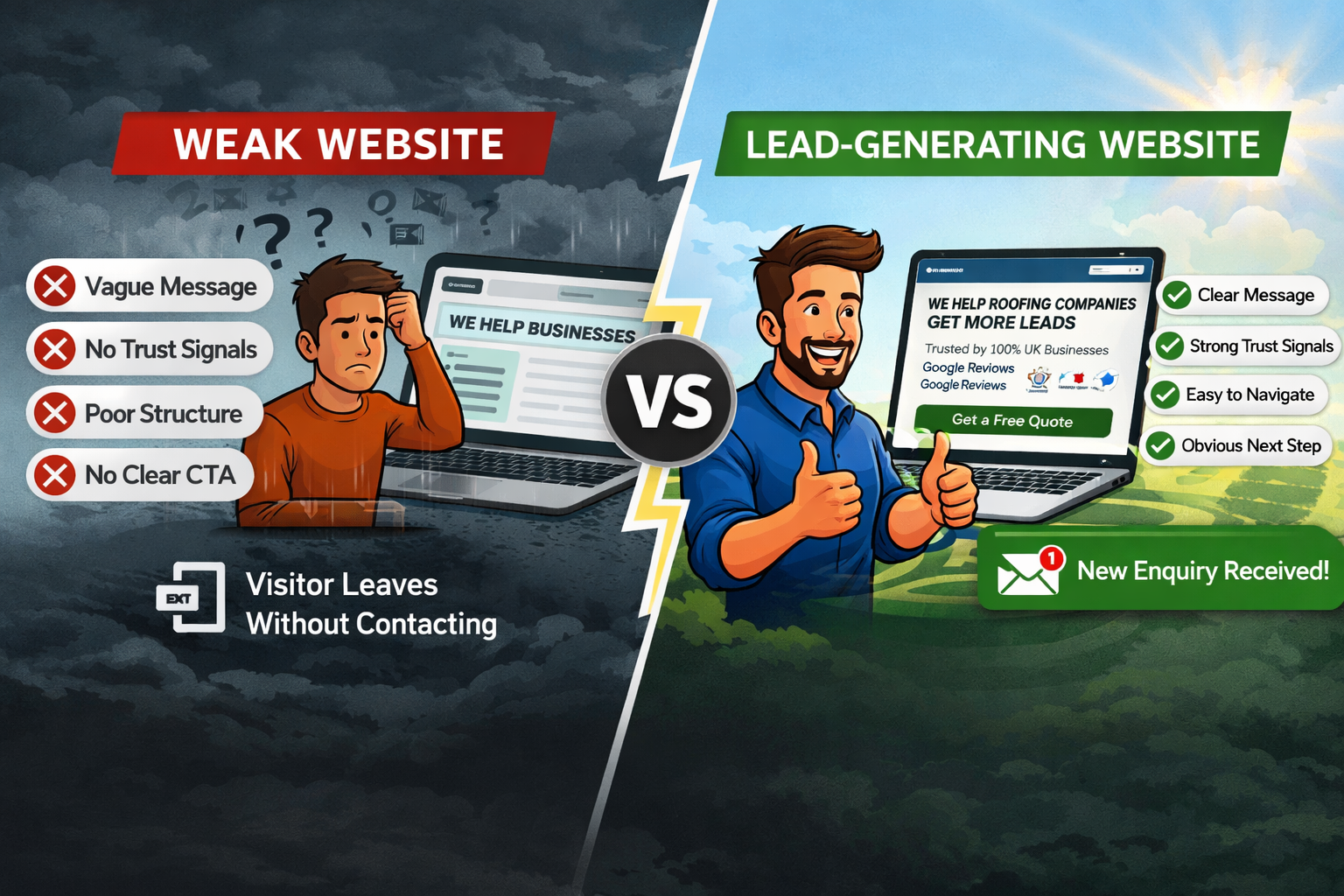
That is what moves someone from just browsing to actually getting in touch.
A lot of business owners focus too much on appearance alone. But looks are only one part of it. A website can look modern and still do absolutely nothing for the business behind it.
A better website is one that is built around action.
A website is not there to look good. It is there to be a lead generator for your business.
How to fix it
If your website is not generating leads, the answer is usually not to throw everything away and start from scratch.
The first step is to look at it honestly.
- Can someone understand what you do within a few seconds?
- Do you give them a reason to trust you?
- Is there a clear path to make an enquiry?
- Are your services explained properly?
- Does the website feel like it was built to help the business grow?
If the answer is no, that is where the work needs to happen.
Usually, the fix is better messaging, better structure, better trust signals, and a clearer path to action. Not more fluff. Not more effects. Just a better website doing the job it should have been doing in the first place.
OpenAI says public websites can appear in ChatGPT search if they can be discovered and are not blocking the relevant crawler, while Google says the same core principles still matter in AI search experiences: useful content, crawlability, and a satisfying page experience.
How we help with this
This is exactly why we build websites the way we do at OneTimeWebsites.
A lot of websites look the part but do not really help the business behind them. We focus on building websites that are clear, trustworthy, easy to use, and designed to actually bring in enquiries.
That means better structure, clearer messaging, and websites that are built around real business goals rather than design for the sake of it.
Because if your website is not helping your business move forward, then it is not doing enough.
Final thought
If your website is not generating leads, that does not always mean no one is seeing it.
It usually means the site is not doing enough once they land on it.
That is good news, because it can be fixed.
And once you fix the message, the trust, the structure, and the next step, your website starts becoming what it should have been all along:
A tool that helps bring in work.
FAQs
Why is my website getting traffic but no leads?
Because traffic alone is not enough. If your website does not build trust, explain your service clearly, or make the next step obvious, people will leave without enquiring.
Can a good-looking website still fail?
Yes. A website can look modern and still do very little. If it does not communicate properly or guide people towards action, it will underperform.
What is the biggest reason websites do not convert?
Usually a mix of vague messaging, weak trust signals, poor structure, and no clear call to action.
Should I rebuild my website or improve it?
Not always rebuild. Sometimes the biggest gains come from improving the messaging, structure, and trust elements on the site you already have.
Do I need more traffic or a better website?
Sometimes both, but many businesses actually need a better website first. More traffic to a weak website usually just means more missed opportunities.